Sleep
Why Am I Awake at 3am? The Perimenopause Sleep Guide
Wide awake in the early hours, for no obvious reason? Here's why perimenopause does this, what genuinely helps, and where magnesium fits (and where it doesn't).

The short version
- Waking around 3am, wide awake for no obvious reason, is one of the most common sleep complaints in perimenopause.
- Shifting progesterone and oestrogen, night sweats and a busier mind all play a part. It isn't a willpower problem.
- The things with the best evidence are unglamorous: a fixed wake-up time, getting out of bed rather than lying there, a cooler room, less alcohol late in the evening, and CBT for insomnia.
- If it's most nights and it's affecting your days, that's a GP conversation, and HRT is worth asking about.
It's 3am. Again. You didn't need the loo, nothing woke you, and yet here you are: eyes open, mind running through tomorrow's to-do list, and the specific dread of watching the clock creep towards the alarm.
If you're in your late thirties, forties or early fifties, you're in very large company. Broken sleep, and particularly that early-hours waking, is one of the symptoms women most often report in perimenopause. It's also one of the most often brushed off as stress, a busy life, or "just getting older".
Here's what's actually going on, what's worth trying, and where supplements fit in. Honestly, they fit in less than the internet would like you to think.
Why perimenopause wakes you up at 3am
Perimenopause is the run-up to your last period. It can start years before it, and hormones don't decline in a neat line. They fluctuate, sometimes wildly, from month to month. A few things tend to stack up at night.
Progesterone drops
Progesterone has a calming, sleep-friendly effect, and it's often one of the first hormones to fall in perimenopause. Less of it can mean lighter sleep that's easier to break.
Oestrogen swings and night sweats
Fluctuating oestrogen affects how your body regulates temperature. A night sweat, even a mild one you don't fully remember, can be enough to pull you out of deep sleep. Many women wake up warm, kick the duvet off, then can't drift back.
The 3am mind
The early hours are naturally a lighter stretch of sleep for everyone. Add the anxiety and low mood that can come with hormonal change, and a brief, normal waking turns into an hour of lying there thinking. The longer it happens, the more your brain learns that bed is a place to be awake.
The things that make it worse
Alcohol is the big one. It can help you nod off, but it fragments sleep later in the night, which is exactly when you're already vulnerable. Late caffeine, a warm bedroom and an irregular wake-up time all add to the pile.
it isn't a willpower problem. it's biology, and there are things that genuinely help.
What actually helps, in order of evidence
1. Anchor your wake-up time
Same alarm every day, weekends included. It's the single most useful lever for steadying your body clock, and it builds the sleep pressure that carries you through the early hours.
2. Don't lie there fighting it
If you've been awake for what feels like 20 minutes, get up. Go somewhere dim, do something dull (a book, not your phone), and go back to bed when you feel sleepy. It sounds backwards, but it's a core part of CBT for insomnia, and it stops your brain linking bed with being awake.
3. Keep the room cool and the layers light
A cooler bedroom, breathable bedding and layers you can shed make night sweats less likely to fully wake you. A glass of water by the bed helps too.
4. Move the wine earlier, or skip it
If you drink, try it earlier in the evening, or have a few alcohol-free nights and see what changes. Many women notice the difference in the early hours first.
5. Get morning daylight
Ten minutes outside soon after waking helps set your body clock, which supports sleepiness at the right end of the day.
6. Ask about CBT for insomnia
CBT for insomnia (CBT-I) is the recommended first-line treatment for long-term insomnia in the UK. It's a structured programme, often available through the NHS or digital apps, and it has far stronger evidence than any supplement.
Where magnesium fits (and where it doesn't)
Magnesium gets sold as a sleep supplement constantly. Here's our honest read: the research on magnesium specifically improving sleep is limited and mixed, so we won't tell you it'll fix your 3am wake-ups.
What we can say is that magnesium contributes to the reduction of tiredness and fatigue, and to the normal functioning of the nervous system. Plenty of women don't get much of it from their diet. If you're running on broken sleep, it's a sensible, low-risk foundation, as long as you're choosing a good one.
That's where the back of the pack matters. Look for the form named plainly (bisglycinate, citrate or taurate rather than oxide, which is cheaper and less well absorbed), and the dose printed per serving, not hidden in a blend.
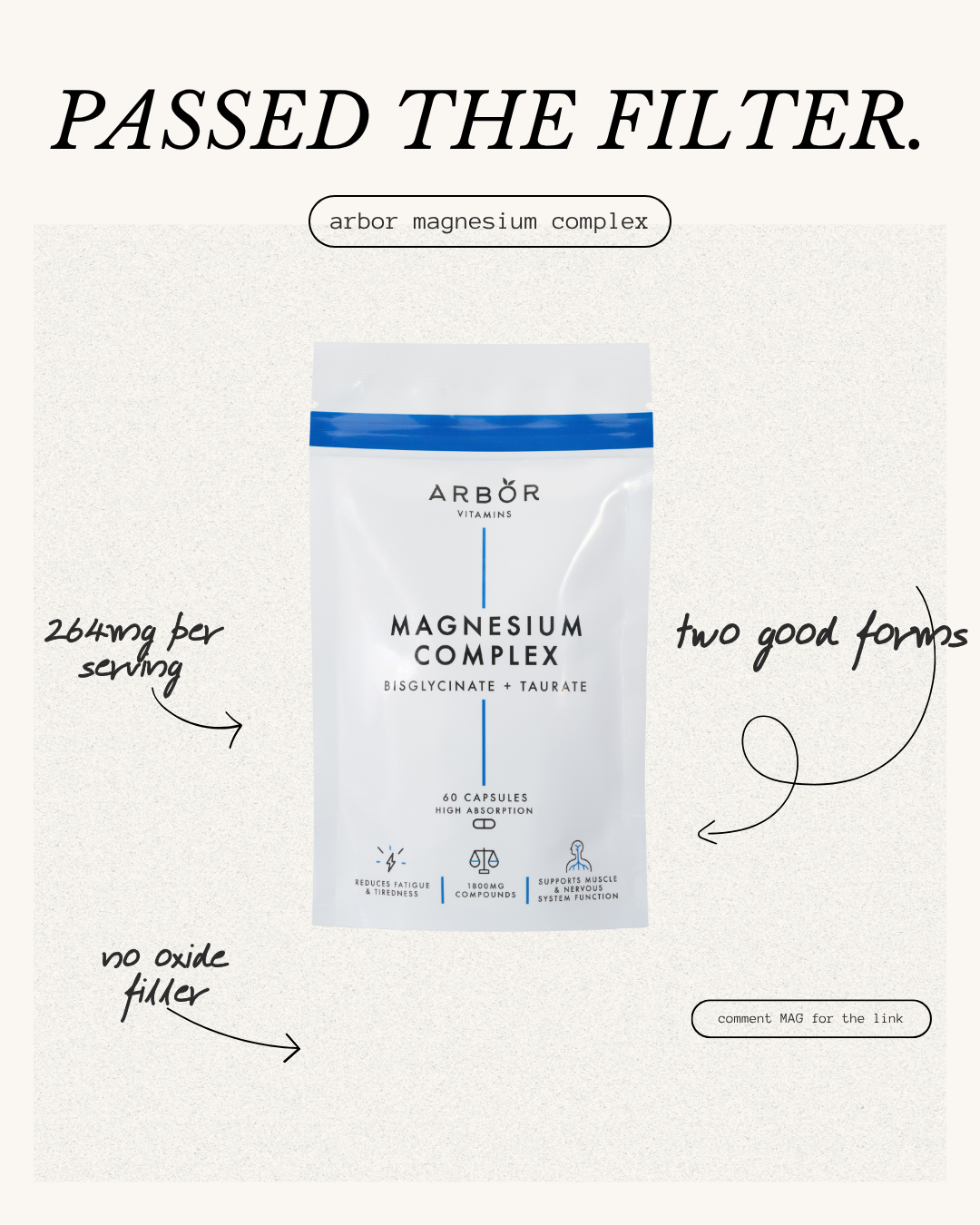
Passed the filter
Arbor Magnesium Complex
Two well-absorbed forms, bisglycinate and taurate. 264mg per serving, printed plainly on the back. No oxide. £17.99
Shop now
And for the practical side of the cool, dark room:

Small ritual
Namaste Linen & Lavender Eye Pillow
Handmade in Norfolk. Blocks the light, adds gentle weight, and the lavender makes it something you look forward to. £17.95
Shop now
When to see your GP
Book an appointment if you're waking most nights, it's affecting how you function during the day, or it's come with other changes like irregular periods, low mood or night sweats. Under NICE guidance, perimenopause in women over 45 can be diagnosed from symptoms, so a "normal" blood test shouldn't be the end of the conversation.
Ask about HRT, which can help where sleep is being disrupted by night sweats, and about CBT for insomnia. If you're under 40 and noticing these changes, mention that too, as it's worth looking into.
Want the bigger picture? Read the perimenopause signs most of us are told to ignore.
The filter's verdict
start with the free stuff: a fixed wake-up time, getting up instead of lying there, a cooler room. add a well-made magnesium as a foundation, not a cure. and if it's most nights, talk to your GP.
Browse the Menopause Edit, or find your starting point in a couple of questions.
About the filter
Beauty & The Benefit is curated, not crowded. We read the back of the pack before the front, and only stock what earns its place. Nothing here replaces advice from your GP or pharmacist, and we'll always tell you when something needs more than a supplement.